
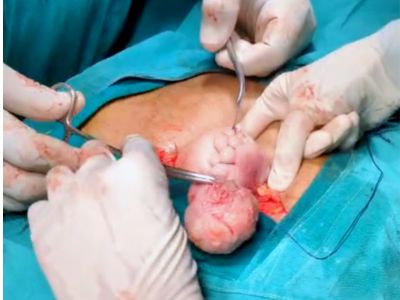
• 34-year-old female patient
• Severe pain during menstruation
• Heavy menstrual bleeding
• Persistent symptoms despite consultation with 3–4 doctors
• No significant relief with previous management
• Large uterine fibroid detected on evaluation
• Patient was young and desired future pregnancy
• Uterus preservation was an important treatment consideration
The patient had been experiencing significant menstrual pain and heavy bleeding and had consulted multiple doctors before seeking further evaluation. Despite previous consultations, her symptoms continued without adequate relief.
• Consulted 3–4 doctors for her symptoms
• Previous medical evaluation and management
• Persistent menstrual pain and heavy bleeding
• No satisfactory improvement in symptoms
• Further evaluation was recommended due to continued symptoms
• Large Uterine Fibroid
• Fibroid was extending from the outer wall of the uterus to the inner lining of uterus
• Severe menstrual pain associated with the fibroid
• Heavy menstrual bleeding
• Symptomatic uterine fibroid in a young woman
• Future fertility desired
• Transvaginal Sonography (TVS)
• Detailed evaluation of the uterus
• Identification and assessment of the uterine fibroid
• Assessment of the uterus for fertility-preserving treatment planning
The patient underwent myomectomy, a uterus-preserving surgical procedure performed to remove the fibroid while retaining the uterus.
Considering the patient's young age and desire to have children in the future, preservation of the uterus was prioritized instead of hysterectomy.
Duration: The patient underwent surgical removal of the uterine fibroid. Following the procedure, the uterus was carefully repaired and sutured. The patient recovered well and was discharged on the second day after surgery.
• Detailed transvaginal sonography for diagnosis
• Identification of the location and size of the uterine fibroid
• Fertility-preserving surgical planning
• Surgical removal of the fibroid while preserving the uterus
• Careful repair and suturing of the uterus
• Post-operative monitoring and recovery assessment
• Large uterine fibroid was successfully removed
• Uterus was preserved
• Patient recovered well after surgery
• Patient was discharged on the second day
• Menstrual pain is expected to reduce
• Heavy menstrual bleeding is expected to improve
• Future fertility was preserved
• Patient can plan for pregnancy after the recommended recovery period
Recovery Duration: Recovery Duration The patient recovered well following the procedure and was discharged on the second day after surgery. The patient was advised to allow adequate healing time following myomectomy. After approximately 6 months, she can consult her doctor regarding planning for pregnancy.
The uterine fibroid was successfully removed through myomectomy while preserving the uterus. The patient's menstrual pain and heavy bleeding are expected to improve following treatment.
Most importantly, because the uterus was preserved, the patient retains the possibility of planning a future pregnancy after completing the recommended recovery period.
Returned to Normal Activities: Yes
I was suffering from severe pain during my periods and heavy bleeding for a long time. I had consulted several doctors, but I did not get proper relief. After consulting Dr. Hema Jajoo, I was diagnosed with a large uterine fibroid. Since I wanted to have children in the future, I was advised to undergo myomectomy to remove the fibroid while preserving my uterus. The surgery went well, and I was discharged on the second day. I am now recovering well, and I am happy that my uterus has been preserved for my future pregnancy plans. My pain and bleeding are also expected to improve. I am very thankful to Dr. Hema Jajoo for her guidance and treatment.
This was a significant case involving a 34-year-old woman with a large symptomatic uterine fibroid, severe menstrual pain, and heavy bleeding.
The patient had already consulted multiple doctors but continued to experience symptoms. Transvaginal sonography identified a large fibroid along the inner wall of the uterus.
Since the patient was young and wanted to have children in the future, a uterus-preserving approach was chosen. Instead of removing the uterus, a myomectomy was performed to remove the fibroid while preserving the uterus and future fertility potential.
• Large symptomatic uterine fibroid
• Severe menstrual pain
• Heavy menstrual bleeding
• Persistent symptoms despite previous consultations
• Young patient with future fertility plans
• Need for uterus-preserving treatment
• Successful myomectomy
• Preservation and repair of the uterus
• Early post-operative recovery
The most significant benefit was the successful removal of the large uterine fibroid while preserving the uterus.
Because the patient was young and desired future pregnancy, myomectomy provided a fertility-preserving treatment option while addressing the underlying cause of her pain and heavy menstrual bleeding.
This case highlights the importance of accurate diagnosis and individualized treatment planning for women with symptomatic uterine fibroids.
A 34-year-old patient presented with severe menstrual pain and heavy bleeding despite consulting multiple doctors. Transvaginal sonography revealed a large fibroid along the inner wall of the uterus.
Considering her young age and desire for future pregnancy, myomectomy was selected instead of hysterectomy. The fibroid was successfully removed while preserving and carefully repairing the uterus.
The patient recovered well and was discharged on the second day after surgery. After approximately 6 months of recovery, she can consult her doctor regarding planning for pregnancy.
The case demonstrates how appropriate diagnosis, fertility-preserving surgery, and individualized treatment can help manage symptomatic uterine fibroids while maintaining future reproductive potential and improving the patient's quality of life.